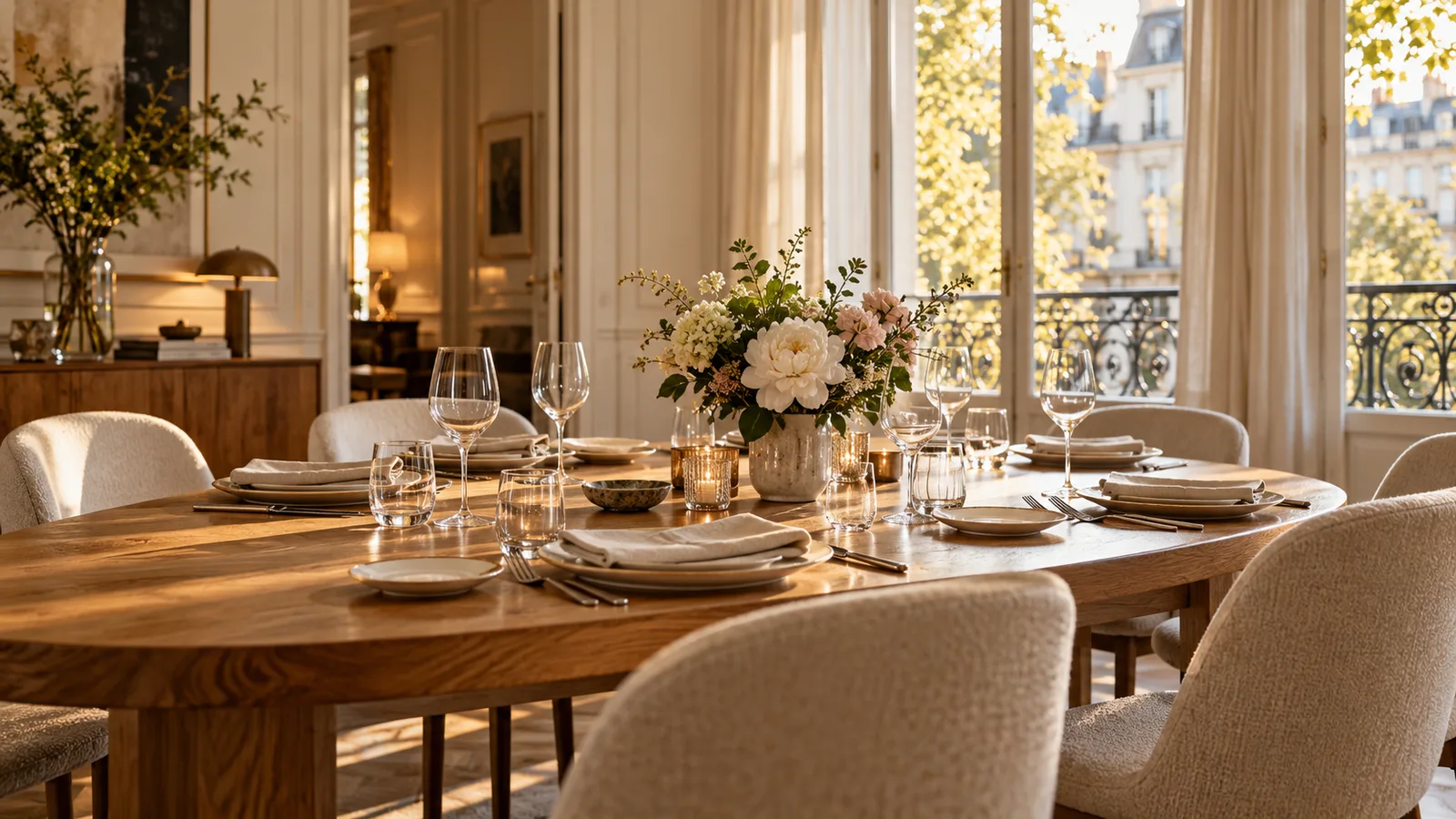
Private Dining in Paris: Write a Better Venue Brief
Brief a Paris private dining venue clearly on room separation, dietary requirements, accessibility, service timing and the pickup after dinner.
By ONNN Editorial Team · 4 min read
Archive date · Updated

Before sending a Paris private dining enquiry, decide what the room must do for your group. A closed space for a confidential discussion is a different request from a quiet table for a family celebration. The venue needs that distinction before it can give a useful answer.
Define what “private” must exclude
Write down the interruption or exposure you need to avoid. For a business dinner, that may mean conversations cannot be heard from an adjacent table. For a celebration, the priority may be keeping speeches within one room while allowing guests to leave without crossing the main dining area.
Ask whether the proposed space has a door, whether it is shared with another party and whether staff or other diners pass through it. A screened section, alcove and enclosed salon are not interchangeable. The venue’s answer should identify the actual room rather than rely on the word “private.”
Include the group composition and intended format. State whether everyone will sit at one table, whether there will be speeches, and whether guests need space to move between seats. Do not infer acoustic separation or exclusive use from photographs; request written confirmation of the arrangement offered for your event.
Turn dietary and access needs into venue questions
Collect dietary requirements by guest before approaching the venue. Separate allergies from intolerances, religious requirements and personal preferences, because each requires a different response. Ask which dishes can be served, what substitutions are proposed and how the venue handles the relevant ingredients. A general statement that alternatives are available does not confirm a safe or suitable menu for a named guest.
Accessibility also needs a route, not a label. Describe the required journey from the pavement to the dining chair. Ask about steps, thresholds, lifts, doorways, accessible toilets and the space around the proposed table. If a guest uses a wheelchair or walking aid, request details for the exact entrance and room assigned to the group.
Keep these questions in the main brief rather than adding them after the room is selected. A visually appropriate salon is not a workable choice when a guest cannot reach it or the menu cannot meet an essential dietary requirement.
Build service timing around the fixed departure
Give the venue a sequence instead of saying that dinner starts in the evening. Record when the first guest is expected, when the group should be seated, where speeches or presentations fit, and when everyone must leave. Then ask whether the proposed menu and service format can follow that sequence.
Work backwards from the least flexible commitment. That could be a train, a performance, an airport journey or a venue closing arrangement confirmed directly for the event. Protect enough time for coats, toilets, settling the bill and gathering the group; the final course is not the same as departure.
Also state how late arrivals should be handled. The venue can then explain whether service waits, begins for the assembled guests or changes format. This is more useful than assuming a delayed flight or congested journey can be absorbed without affecting the meal.
Separate the dining address from the pickup point
Do not assume the restaurant entrance is the right place for a vehicle handoff. Ask the venue where groups normally assemble after a private event and whether the entrance used at departure differs from the arrival door. Record the street, side of the building and a visible meeting feature without relying on a venue name alone.
Assign one guest to confirm that the party is ready and one contact for the vehicle arrangement. Share mobility needs, luggage information and the number of travelers relevant to the journey, but keep unrelated identity documents and payment records out of group messages. The distinction between useful journey details and unnecessary personal data is explained in Sharing Ride Details in Paris Without Oversharing.
If guests are returning to different hotels, define whether they leave together or use separate arrangements. The venue brief should name the agreed assembly point and the intended departure sequence, while the transport request should carry the correct passenger and luggage details.
Airport arrival checklist: confirm the operating flight, airport and terminal; save the accommodation and restaurant addresses; send the venue the room, dietary, access and timing brief; verify the restaurant entrance and post-dinner meeting point; keep the venue and journey contacts available offline; and describe the proposed airport or event transfer through the ONNN journey planner without treating the request as confirmation of availability, booking or price.
For current visitor information, check the City of Paris and confirm the details of your plans directly with the relevant venue or operator.